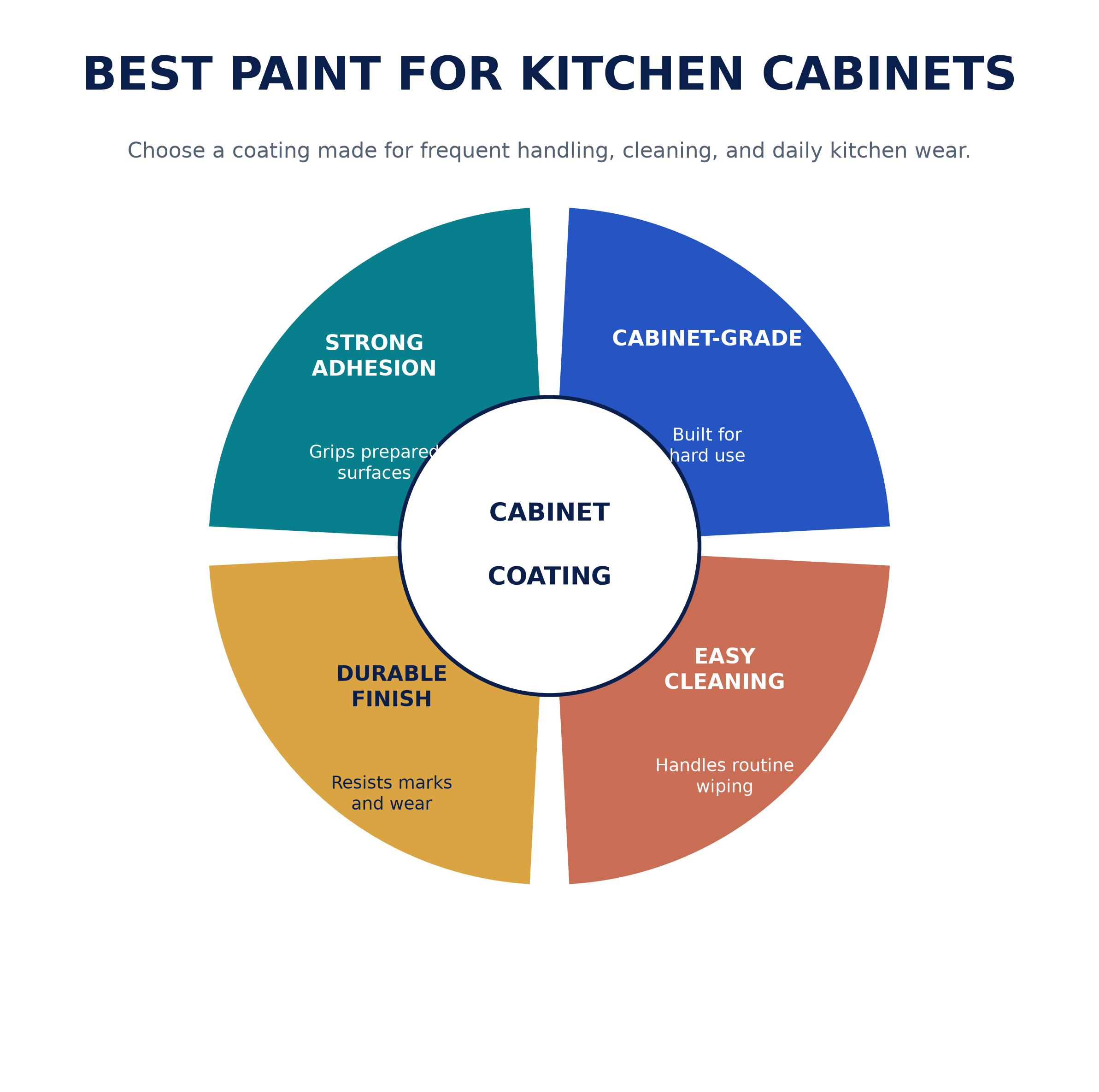
The best paint for kitchen cabinets is a hard-curing cabinet enamel, either a water-based alkyd or an acrylic-urethane, in a satin or semi-gloss finish. Regular wall paint stays soft and scuffs, while cabinet enamel dries to a tough, washable shell. Prep and spraying are what make it last.
You have picked the color; now you are staring at a wall of cans wondering which one survives a kitchen. It is the right question, because the best paint for cabinets is nothing like the paint on your walls. The finish has to cure into armor, not just dry.
We spray a lot of kitchens for Macomb County homeowners, from Roseville to Oakland County. Choosing the best paint for kitchen cabinets is really about the enamel, primer, and prep, which is why professional cabinet painting relies on sprayed, hard-curing enamels. This guide covers it all, and a free estimate is only a call away.
What Is the Best Paint for Cabinets?
Cabinets take more abuse than any wall in the house. That is why cabinet paint is a category of its own, built to survive hands, grease, water, and daily slamming. Choosing it well is most of the battle.
The goal is a durable cabinet finish that looks sprayed-on smooth and shrugs off kitchen life. Get the product and prep right and it holds up for a decade or more. Get them wrong and it chips within months.
There is a bonus, too. A quality repaint is a cost-effective cabinet update that transforms a kitchen for a fraction of replacement. It is why so many Michigan homeowners choose paint over all-new cabinets.
Why Cabinets Need a Different Kind of Paint
Wall paint and cabinet paint are not interchangeable. Standard latex wall paint stays a little soft forever, so it dents, scuffs, and marks under everyday use. On a cabinet, that is a fast road to a worn-out look.
Cabinets need a hard, scratch-resistant finish that cures rather than just dries. Enamel keeps hardening for days into a tough film, which is what makes it chip- and stain-resistant in a working kitchen. That is the whole reason cabinet enamels exist.
There is also the matter of handling. Cabinet doors and drawers get touched constantly, so the finish has to resist oils from hands and splashes from cooking. Wall paint simply is not built for that.
Best Types of Cabinet Paint (Enamels & Alkyds)
So which paint, exactly? The honest answer is a hard-curing cabinet enamel, not wall paint. A few types dominate.
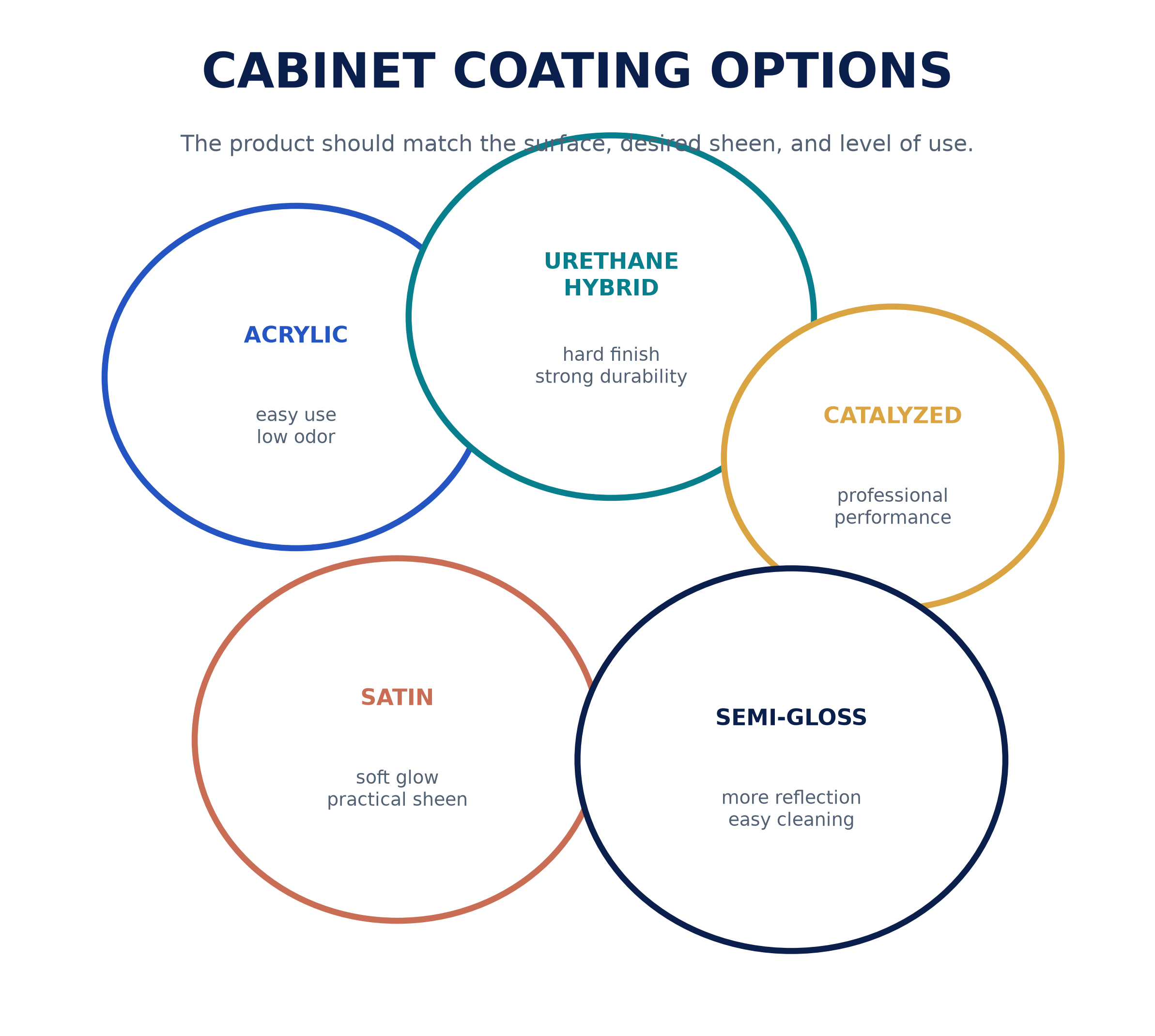
- Cabinet-grade enamel is the category to look for, engineered to level smooth and cure hard.
- Water-based alkyd enamel combines the flow of an oil-based finish with easy water cleanup.
- Acrylic urethane enamel offers excellent adhesion and a tough, flexible shell.
- The big brands, like Benjamin Moore, Sherwin-Williams, and PPG, all make proven cabinet lines.
Any of these beats standard wall paint on a cabinet. Independent roundups of the best cabinet enamels land on the same categories we use every day. The trick is matching the product to your kitchen and applying it correctly.
Choosing the Right Primer
Primer is where a lot of cabinet jobs quietly succeed or fail. It is the glue layer between your slick, often-greasy cabinets and the enamel on top. Skip it and the finish will not hold.
For most cabinets, a bonding primer is the right call, since it grips glossy and hard-to-stick surfaces. If you are covering knots, tannin, or old stains, a stain-blocking primer keeps them from bleeding through. Sometimes a single product does both jobs.
None of it works without proper surface preparation first. Clean, degreased, lightly sanded cabinets give the primer something to bond to. Primer is a partner to prep, not a substitute for it.
Best Sheen for Kitchen and Bathroom Cabinets
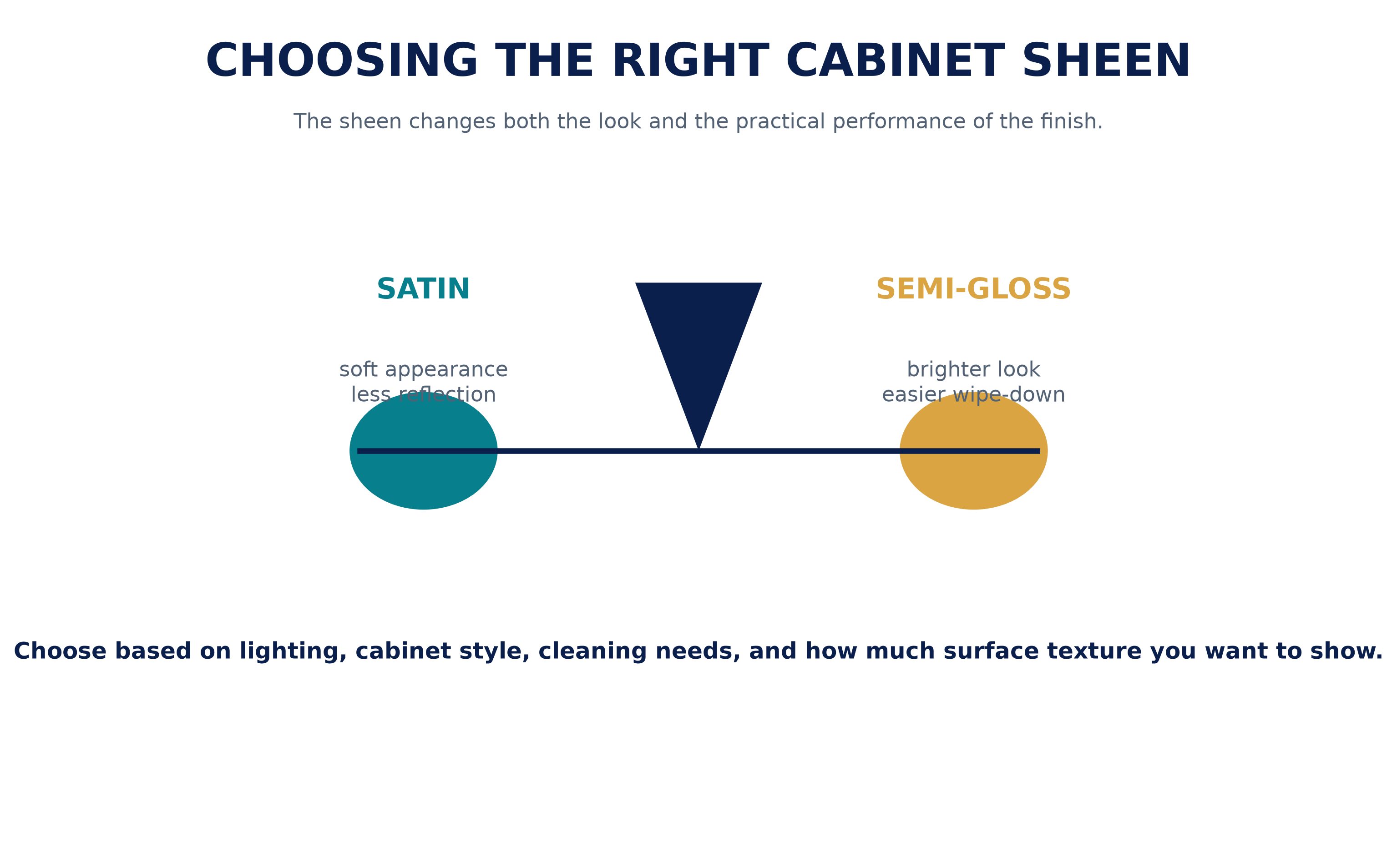
Sheen is not just looks on a cabinet; it is cleanability. A satin and semi-gloss sheen is the sweet spot, glossy enough to wipe down but not so shiny it shows every flaw. Flat and matte finishes are too porous for cabinets.
Between the two, semi-gloss is the most durable and wipeable, while satin looks a touch softer. For kitchen and bathroom cabinets that face grease and moisture, either works, with many homeowners leaning semi-gloss in the kitchen. Match it to how hard the room works.
Color is the fun part. Modern cabinet enamels come in nearly unlimited custom color options, from crisp whites to deep navies and greens. A pro can match almost any shade you bring in.
Brushed vs. Sprayed: Getting a Factory-Smooth Finish
When it comes to application, brushed vs. sprayed is the question that decides how the finish looks. Brushing leaves texture and stroke marks, while spraying lays down glass-smooth. For cabinets, spraying wins nearly every time.
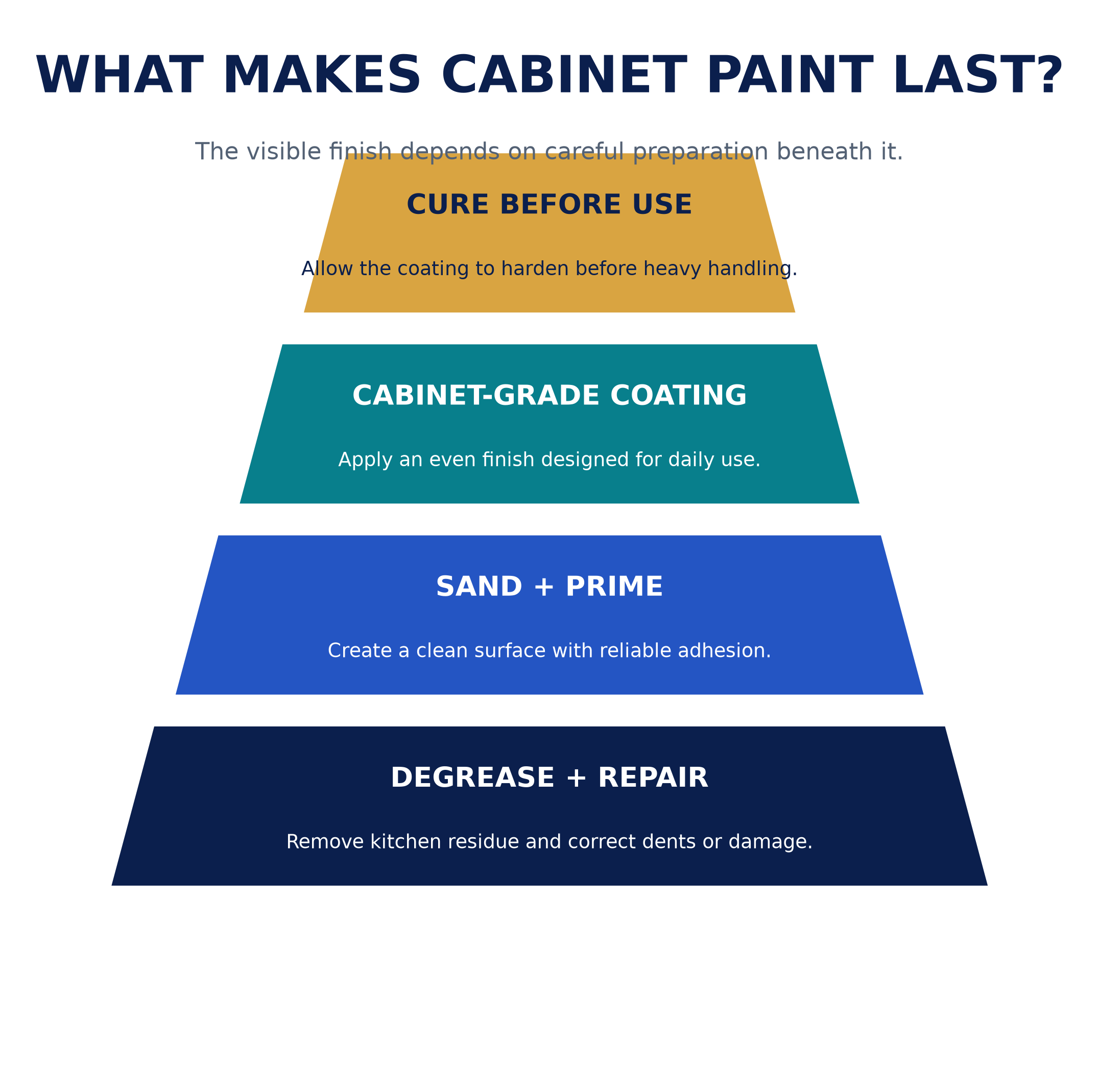
- Cleaning and degreasing every surface so the coating bonds.
- Sanding and scuffing the doors and boxes for grip.
- Priming with the right primer for the surface.
- Spray the enamel in thin, even coats, the step that defines spray application.
- Let it cure fully into a hard, factory-smooth finish.
That cure step is not optional. Cure time and durability go hand in hand, since enamel needs days to reach full hardness. It is the same care we bring to kitchens for homeowners in Sterling Heights, Clinton Township, and Shelby Township across Macomb County and Metro Detroit.
Professional Cabinet Painting in Macomb County
So, DIY or hire out? The DIY vs. hiring a pro decision usually comes down to two things: spray equipment and prep experience. Rolling cabinets by hand rarely matches a sprayed finish.
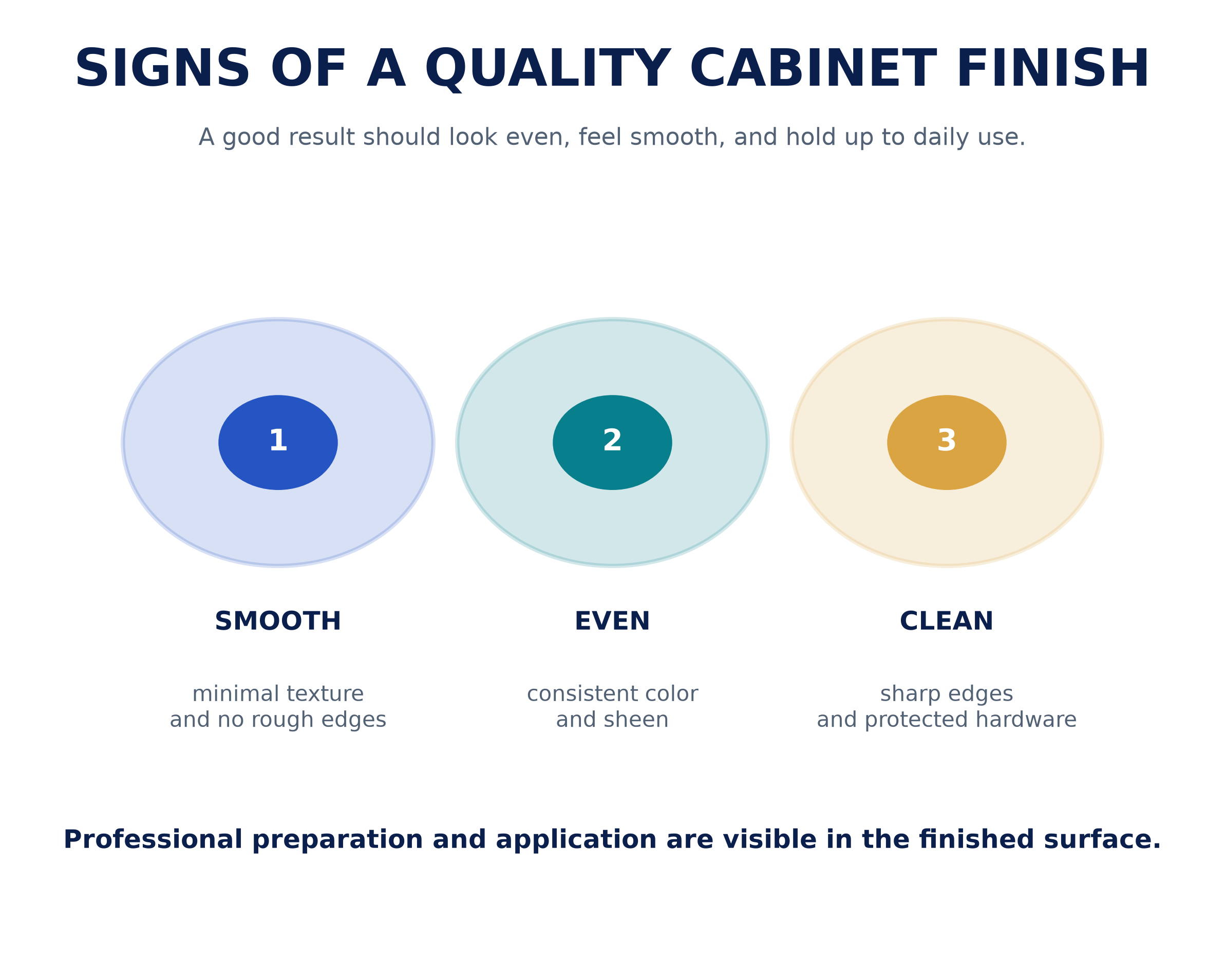
Professional cabinet painters bring the degreasing, sanding, priming, and spraying a great finish demands. That process is what delivers long-lasting results. Working with a licensed and insured crew also protects your home along the way.
If you want the best paint for kitchen cabinets chosen and applied correctly, we can help. Book a free color consultation to match the right paint and sheen to your kitchen. Request a free quote and we will handle the rest.
Frequently Asked Questions
What is the best paint for kitchen cabinets?
A hard-curing cabinet enamel, either a water-based alkyd or an acrylic-urethane, in satin or semi-gloss. These cure into a tough, washable finish that ordinary wall paint cannot match.
What sheen is best for cabinets, satin or semi-gloss?
Both work, but semi-gloss is the most durable and easiest to wipe clean, which makes it a favorite in kitchens. Satin looks slightly softer and still cleans up well.
Do I need to prime cabinets before painting?
Almost always. A bonding primer helps enamel grip slick surfaces, and a stain-blocking primer prevents knots and tannins from bleeding through. Primer is what keeps the finish from failing early.
Should cabinets be brushed or sprayed?
Spraying produces the smoothest, brush-mark-free finish, which is why pros spray cabinets. Brushing can work in a pinch but rarely matches that factory-smooth look.
How durable is a painted cabinet finish?
Very durable when done right. Cabinet enamel over proper prep cures into a hard, chip- and scratch-resistant shell that holds up to years of daily use.
Is it worth hiring a pro to paint cabinets?
For a factory-smooth, long-lasting result, usually yes. The prep, spray equipment, and cure knowledge are hard to replicate as a DIYer, especially on a kitchen you use every day.
